Curriculum
Grade XII Biology
Biology Chapters
0/13
-
CH-1 Sexual-Reproduction-Flowering-Plants
 Preview
 -
CH-2 Human-Reproduction
Preview
-
CH-3 Reproductive-Health
Preview
-
CH-4 Inheritance-And-Variation
Preview
-
CH-5 Molecular-Basis-Of-Inheritance
Preview
-
CH-6 Evolution
Preview
-
CH-7 Human-Health-And-Disease
Preview
-
CH-8 Microbes-In-Human-Welfare
Preview
-
CH-9 Biotechnology-Principles
Preview
-
CH-10 Biotechnology-Applications
Preview
-
CH-11 -Organisms-And-Populations
Preview
-
CH-12 Ecosystem
Preview
-
CH-13 -Biodiversity-And-Conservation
Preview
Work Sheets
0/13

CH-7 Human-Health-And-Disease
|
Grade 12 Science | Chapter 7 Human Health and DiseaseGood health is more than the absence of illness. This chapter builds the kinds of disease and the pathogens that cause them, how the immune system defends the body, how vaccination protects us, and the harm done by the misuse of drugs and alcohol.
|
|
Contents
|
1. Health and Disease |
Health is a state of complete physical, mental and social well-being, not just the absence of disease. A disease is any disturbance that harms the working of the body. Some diseases are infectious, caused by germs and able to spread, while others are non infectious, such as cancer, which do not spread from person to person.
|
Core idea Infectious diseases are caused by pathogens and can spread, so knowing the pathogen and how it travels is the key to preventing them.
|
|
Diagram 1 – Pathogens
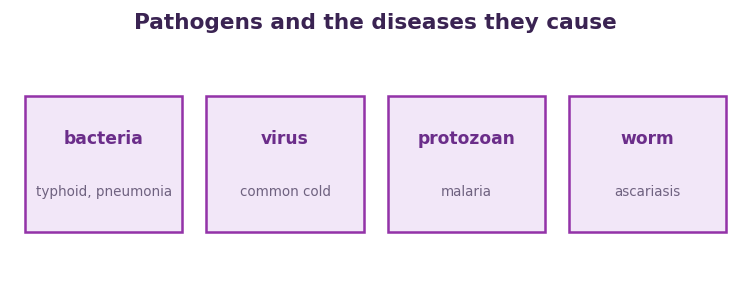
Fig 1. Different kinds of pathogen cause different diseases, from bacteria and viruses to protozoans and worms. |
2. Diseases and Their Pathogens |
Infectious diseases are caused by pathogens. Bacteria cause typhoid and pneumonia, viruses cause the common cold, protozoans such as the malarial parasite cause malaria, and worms cause diseases like ascariasis. They spread through contaminated food and water, through the air, or through carriers such as the mosquito.
3. The Immune System |
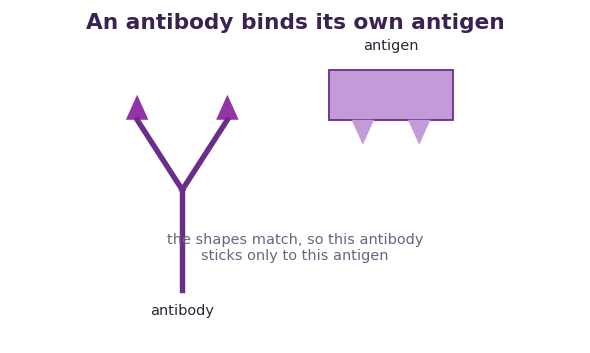
The body defends itself through the immune system. Innate immunity is the general defence we are born with, such as the skin, mucus and the cells that engulf germs. Acquired immunity is specific and has memory: B cells make antibodies that stick to a particular germ, and T cells attack cells that are infected.
|
Diagram 2 – Antibody and Antigen
Fig 2. An antibody has a shape that fits one antigen, so it binds only to that germ, like a key in a lock. |
4. Vaccination and Immunisation |
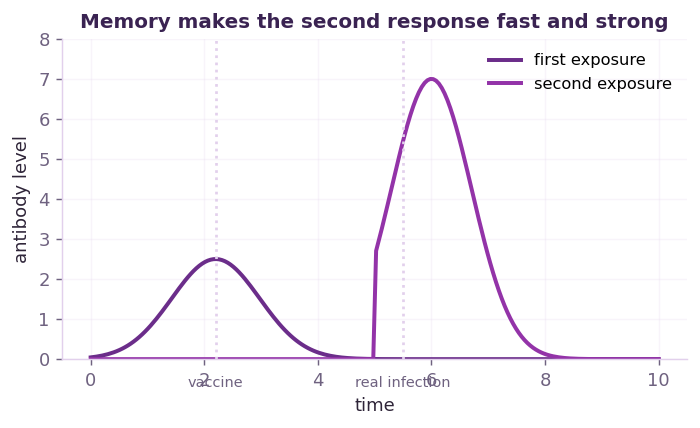
A vaccine gives the body a harmless taste of a germ so that it makes memory cells without falling ill. If the real germ arrives later, the response is fast and strong. This is active immunity, built by the body itself. Giving ready made antibodies gives quick but short lived passive immunity.
|
Diagram 3 – Vaccination
Fig 3. The first small response leaves memory, so the second response to the real germ is far quicker and larger. |
5. AIDS and Cancer |
AIDS is caused by a virus that attacks the immune system itself, leaving the body open to other infections. It spreads by particular routes and is prevented by awareness and safe practice. Cancer is not infectious. It arises when cells lose the normal controls and divide without stopping, forming a growth that can spread.
6. Drugs and Alcohol |
The misuse of drugs and alcohol harms both body and mind and can lead to addiction, a state in which a person cannot easily stop. It damages health, study and relationships. The best protection is awareness, the support of family and friends, healthy interests, and seeking help early when it is needed.
7. Key Reasoning (Principles) |
|
Principle 1: Diseases are infectious or non infectious Infectious diseases are caused by pathogens and can spread, while non infectious ones such as cancer do not, so each needs a different approach to prevention. |
|
Principle 2: Immunity is general and specific Innate immunity guards against germs in general, while acquired immunity targets a particular germ and remembers it for next time, giving lasting protection. |
|
Principle 3: Vaccination trains the memory A vaccine lets the body build memory cells safely, so a later meeting with the real germ brings a quick and strong response before illness can take hold. |
8. Worked Examples |
| Example 1 |
|
Q: Is health only the absence of disease? Show SolutionIt is broader than that. Answer: No, it is complete physical, mental and social well-being. |
| Example 2 |
|
Q: What kind of pathogen causes typhoid? Show SolutionA common germ group. Answer: A bacterium. |
| Example 3 |
|
Q: What causes malaria? Show SolutionSpread by the mosquito. Answer: A protozoan, the malarial parasite. |
| Example 4 |
|
Q: What is innate immunity? Show SolutionThe defence we are born with. Answer: The general, always ready defence. |
| Example 5 |
|
Q: What do B cells make? Show SolutionThey stick to germs. Answer: Antibodies. |
| Example 6 |
|
Q: What does a vaccine give the body? Show SolutionA safe taste of a germ. Answer: Memory cells against the germ. |
| Example 7 |
|
Q: What kind of immunity does a vaccine build? Show SolutionMade by the body itself. Answer: Active immunity. |
| Example 8 |
|
Q: What does the AIDS virus attack? Show SolutionIt weakens defence. Answer: The immune system. |
| Example 9 |
|
Q: Is cancer infectious? Show SolutionIt does not spread between people. Answer: No. |
| Example 10 |
|
Q: What is addiction? Show SolutionA person cannot easily stop. Answer: A state of not being able to stop using a substance. |
9. Practice Sets A to D |
| Set A – Multiple Choice (Basic) |
|
1. Health is: (a) only physical (b) complete well-being (c) only mental (d) no disease only 2. Typhoid is caused by a: (a) virus (b) bacterium (c) worm (d) fungus 3. Antibodies are made by: (a) T cells (b) B cells (c) red cells (d) nerve cells 4. A vaccine builds: (a) passive immunity (b) active immunity (c) no immunity (d) allergy 5. Cancer is: (a) infectious (b) not infectious (c) a bacterium (d) a virus Reveal Answers1. (b) complete well-being. 2. (b) bacterium. 3. (b) B cells. 4. (b) active immunity. 5. (b) not infectious. |
| Set B – Short Answer (Understanding) |
|
1. Define health. 2. Give a pathogen for malaria and one for the common cold. 3. Distinguish innate and acquired immunity. 4. How does a vaccine work? 5. What is addiction? Reveal Answers1. Complete physical, mental and social well-being, not merely the absence of disease. 2. Malaria is caused by a protozoan parasite; the common cold is caused by a virus. 3. Innate immunity is the general defence we are born with; acquired immunity is specific and has memory. 4. It gives a harmless form of a germ so the body makes memory cells, ready for a fast strong response later. 5. A state in which a person cannot easily stop using a substance, often after repeated misuse. |
| Set C – Application and Reasoning |
|
1. Why is knowing how a disease spreads useful? 2. Why does an antibody bind only its own antigen? 3. Why is the second response to a germ faster than the first? 4. Why does the AIDS virus make a person prone to other infections? 5. Why is early support important for someone facing addiction? Reveal Answers1. If we know the route, we can break it, for example by clean water or by controlling mosquitoes. 2. Its shape fits that one antigen like a key in a lock, so it sticks only to that germ. 3. The first response leaves memory cells, so the body recognises the germ at once and reacts strongly. 4. It weakens the immune system, so other germs that would normally be stopped can take hold. 5. Help early can prevent lasting harm and make recovery far more likely before the habit deepens. |
| Set D – Higher Order (Challenge) |
|
1. Explain why prevention differs for infectious and non infectious disease. 2. Explain how innate and acquired immunity work together. 3. Explain the difference between active and passive immunity. 4. Explain why cancer cells are dangerous. 5. Explain how awareness helps protect against drug misuse. Reveal Answers1. Infectious disease is prevented by blocking pathogens and their spread, while non infectious disease needs healthy living and early detection. 2. Innate immunity holds off germs at once and buys time, while acquired immunity mounts a targeted attack and remembers the germ. 3. Active immunity is built by the body and lasts, while passive immunity is borrowed antibodies that act fast but fade. 4. They divide without the normal checks and can spread to other parts, disturbing the working of the body. 5. Understanding the harm and the risks helps a person make safe choices and seek help before a habit forms. |
|
Chapter Summary
|
|||||||||||||||||||||||||||||||
| Eight Point Exam Quick Check | ||||||||||||||||||||||||||||||||
|
||||||||||||||||||||||||||||||||
|
School Revise Virtual Lab Explore these ideas with interactive simulations and visual tools.
|
|
Class 12 Biology Chapter 7: Human Health and Disease, Complete Notes and Practice These free Class 12 Biology notes on Human Health and Disease follow the NCERT syllabus and cover diseases and their pathogens, innate and acquired immunity, vaccination and the risks of substance misuse, with worked examples and graded practice, free on SchoolRevise.com. |
 Google