Curriculum
Grade XII Biology
Biology Chapters
0/13
-
CH-1 Sexual-Reproduction-Flowering-Plants
 Preview
 -
CH-2 Human-Reproduction
Preview
-
CH-3 Reproductive-Health
Preview
-
CH-4 Inheritance-And-Variation
Preview
-
CH-5 Molecular-Basis-Of-Inheritance
Preview
-
CH-6 Evolution
Preview
-
CH-7 Human-Health-And-Disease
Preview
-
CH-8 Microbes-In-Human-Welfare
Preview
-
CH-9 Biotechnology-Principles
Preview
-
CH-10 Biotechnology-Applications
Preview
-
CH-11 -Organisms-And-Populations
Preview
-
CH-12 Ecosystem
Preview
-
CH-13 -Biodiversity-And-Conservation
Preview
Work Sheets
0/13

CH-8 Microbes-In-Human-Welfare
|
Grade 12 Science | Chapter 8 Microbes in Human WelfareMicrobes are not only causes of disease; they do a great deal of good. This chapter builds their use in food and industry, in cleaning our sewage, in making biogas, and in farming as biocontrol agents and biofertilisers.
|
|
Contents
|
1. Microbes in Food |
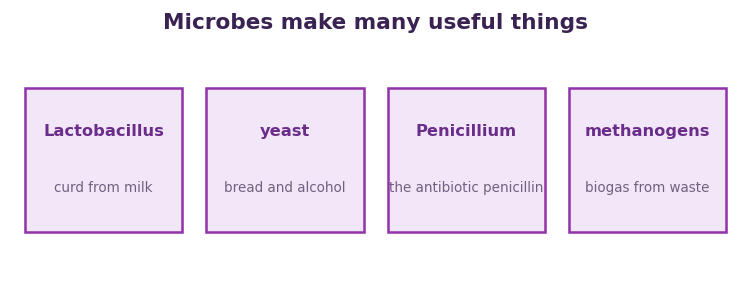
Many everyday foods are made with microbes. Lactobacillus turns milk into curd, and it also improves the food value. Yeast makes bread dough rise by giving off gas, and it is used to make cheese and other foods. So a great deal of what we eat depends on the quiet work of microbes.
|
Core idea Microbes are usefully at work all around us, making foods, medicines and fuels, cleaning our waste, and helping our crops to grow.
|
|
Diagram 1 – Useful Microbes
Fig 1. Different microbes give us curd, bread, alcohol, antibiotics and biogas. |
2. Microbes in Industry |
In industry, microbes work through fermentation. Yeast ferments sugars to make alcohol. Some microbes make antibiotics, such as penicillin from the mould Penicillium, which has saved countless lives. Others are used to make organic acids and useful enzymes on a large scale.
3. Sewage Treatment |
Microbes clean our sewage, the dirty water from homes. In primary treatment the solids are removed by settling. In secondary treatment microbes digest the organic matter that is left, so the water is far cleaner before it is released. Without microbes this would not be possible.
4. Biogas |
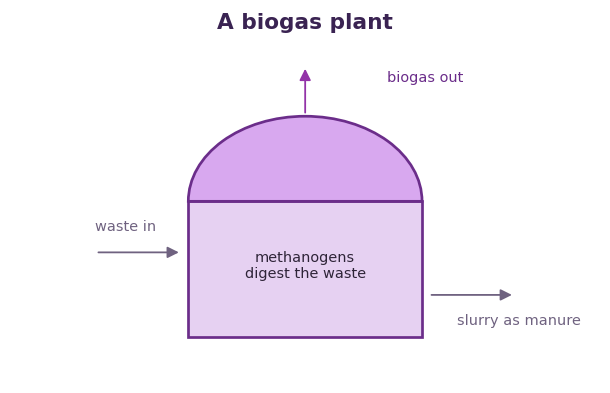
Certain microbes called methanogens break down waste in the absence of air and give off biogas, which is mostly methane and burns as a clean fuel. A biogas plant uses cattle dung and other waste, giving both fuel and a leftover slurry that makes good manure.
|
Diagram 2 – Biogas Plant
Fig 2. Methanogens digest the waste, giving off biogas as fuel and leaving a slurry that is used as manure. |
5. Biocontrol Agents |
Biocontrol uses living things to keep pests in check, cutting the need for harmful chemicals. The bacterium Bacillus thuringiensis kills certain insect larvae, the fungus Trichoderma controls plant diseases, and helpful animals such as the ladybird eat pests like aphids. This keeps the balance of nature and protects the soil.
6. Biofertilisers |
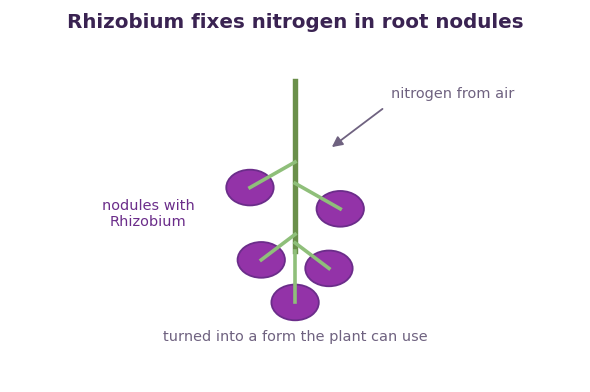
Biofertilisers are living things that enrich the soil naturally. Rhizobium, living in the root nodules of legumes, takes nitrogen from the air and turns it into a form the plant can use. Mycorrhiza, a fungus on roots, helps the plant take up nutrients, and cyanobacteria add nitrogen to fields.
|
Diagram 3 – Biofertiliser
Fig 3. Rhizobium in the root nodules fixes nitrogen from the air into a form the plant can use. |
7. Key Reasoning (Principles) |
|
Principle 1: Microbes make useful products From curd and bread to alcohol and antibiotics, microbes turn simple materials into foods and medicines we rely on every day. |
|
Principle 2: Microbes clean our waste By breaking down organic matter, microbes treat sewage and make biogas, turning waste into clean water and useful fuel. |
|
Principle 3: Microbes help our farming As biocontrol agents and biofertilisers, microbes protect crops and enrich the soil, cutting the need for harmful chemicals. |
8. Worked Examples |
| Example 1 |
|
Q: Which microbe turns milk into curd? Show SolutionA helpful bacterium. Answer: Lactobacillus. |
| Example 2 |
|
Q: Why does bread dough rise? Show SolutionA gas is given off. Answer: Yeast gives off gas as it ferments. |
| Example 3 |
|
Q: From which mould does penicillin come? Show SolutionA well known antibiotic. Answer: Penicillium. |
| Example 4 |
|
Q: What removes solids in sewage treatment? Show SolutionThe first stage. Answer: Primary treatment by settling. |
| Example 5 |
|
Q: What do microbes do in secondary treatment? Show SolutionThey act on the organic matter. Answer: They digest the organic matter. |
| Example 6 |
|
Q: Which microbes make biogas? Show SolutionThey work without air. Answer: Methanogens. |
| Example 7 |
|
Q: What is the main gas in biogas? Show SolutionIt burns cleanly. Answer: Methane. |
| Example 8 |
|
Q: Which microbe fixes nitrogen in root nodules? Show SolutionIt lives with legumes. Answer: Rhizobium. |
| Example 9 |
|
Q: What is Bacillus thuringiensis used for? Show SolutionIt kills certain larvae. Answer: As a biocontrol agent against insect pests. |
| Example 10 |
|
Q: What is a biofertiliser? Show SolutionIt enriches the soil naturally. Answer: A living thing that enriches the soil. |
9. Practice Sets A to D |
| Set A – Multiple Choice (Basic) |
|
1. Curd is made from milk by: (a) yeast (b) Lactobacillus (c) Penicillium (d) Rhizobium 2. Bread dough rises because of: (a) salt (b) yeast (c) sugar (d) acid 3. Penicillin comes from the mould: (a) Rhizobium (b) Penicillium (c) yeast (d) Lactobacillus 4. Biogas is mostly: (a) oxygen (b) methane (c) carbon dioxide (d) nitrogen 5. Rhizobium fixes: (a) carbon (b) nitrogen (c) oxygen (d) phosphorus Reveal Answers1. (b) Lactobacillus. 2. (b) yeast. 3. (b) Penicillium. 4. (b) methane. 5. (b) nitrogen. |
| Set B – Short Answer (Understanding) |
|
1. Name two foods made with microbes. 2. What is fermentation used for in industry? 3. Describe the two stages of sewage treatment. 4. How is biogas produced? 5. What is a biofertiliser? Reveal Answers1. Curd, made by Lactobacillus, and bread, raised by yeast. 2. To make products such as alcohol, antibiotics, organic acids and enzymes on a large scale. 3. Primary treatment settles out the solids, then secondary treatment uses microbes to digest the organic matter. 4. Methanogens break down waste in the absence of air and give off biogas, mostly methane. 5. A living thing, such as Rhizobium, that enriches the soil naturally, here by fixing nitrogen. |
| Set C – Application and Reasoning |
|
1. Why is Lactobacillus good for us as well as for making curd? 2. Why was the discovery of penicillin so important? 3. Why is secondary sewage treatment essential? 4. Why is biogas a clean fuel choice? 5. Why do legume crops improve the soil? Reveal Answers1. It sets the milk into curd and also raises its food value, adding useful vitamins. 2. It gave the first widely used antibiotic, letting doctors cure many once deadly infections. 3. Microbes digest the organic waste that settling cannot remove, so the water leaves far cleaner. 4. It uses waste that would otherwise pollute, and burns cleanly, while leaving a useful manure behind. 5. Their root nodules hold Rhizobium, which fixes nitrogen into the soil for later crops to use. |
| Set D – Higher Order (Challenge) |
|
1. Explain how microbes turn waste into value in a biogas plant. 2. Explain why biocontrol is better than heavy use of chemicals. 3. Explain how sewage treatment protects rivers and health. 4. Explain how a biofertiliser reduces the need for chemical fertiliser. 5. Explain the wide range of ways microbes serve human welfare. Reveal Answers1. Methanogens digest the waste without air, giving biogas as fuel and a slurry that returns nutrients to the soil. 2. It targets the pest while sparing other life and the soil, keeping the natural balance that chemicals disturb. 3. By digesting the organic load, it stops sewage fouling rivers and spreading disease when the water is released. 4. It fixes or frees nutrients naturally in the soil, so less manufactured fertiliser is needed for the same crop. 5. They make food, medicines and fuel, clean our waste, and protect and enrich our farms, touching daily life at every turn. |
|
Chapter Summary
|
|||||||||||||||||||||||||||||||
| Eight Point Exam Quick Check | ||||||||||||||||||||||||||||||||
|
||||||||||||||||||||||||||||||||
|
School Revise Virtual Lab Explore these ideas with interactive simulations and visual tools.
|
|
Class 12 Biology Chapter 8: Microbes in Human Welfare, Complete Notes and Practice These free Class 12 Biology notes on Microbes in Human Welfare follow the NCERT syllabus and cover microbes in food and industry, sewage treatment, biogas, biocontrol agents and biofertilisers, with clear diagrams, worked examples and graded practice, free on SchoolRevise.com. |
 Google